Logo
  • E-mail
  • Facebook
  • Instagram
  • Twitter

Martin Burrows
07917 605 084
martin@komcoaching.co.uk

Menu   ≡ ╳
  • HOME
  • Personlised COACHING
    • Levels of Coaching
    • Fully Personalised Coaching Compare
  • Fixed Training Plans Intro
    • More Info – Fixed Training Plans
  • Guided Rides & Holidays
  • Gift Vouchers
  • BLOG
  • Why Choose Us?
    • About
      • Testimonials
  • Contact
    • Privacy Policy, T’s &C’s
  • KOM CHALLENGES website

Carrot Biryani

20th August 2018 By Martin

Cheap, low calorie, tasty and nutritious!

Serves 2 generous portions or can make 3 smaller portions

Calories per portion if only serving two 238, if serving three 158 calories

Total cost approx £2.00 – £1.00 per portion serving two –  £0.66p if serving three.
Ingredients 

Chopped onions 200g

Shredded carrot 300g

Steam bag cauliflower rice

Frozen fine cut green beans 200g

Petits pois 200g

Garam Masala 1 tablespoon


Method

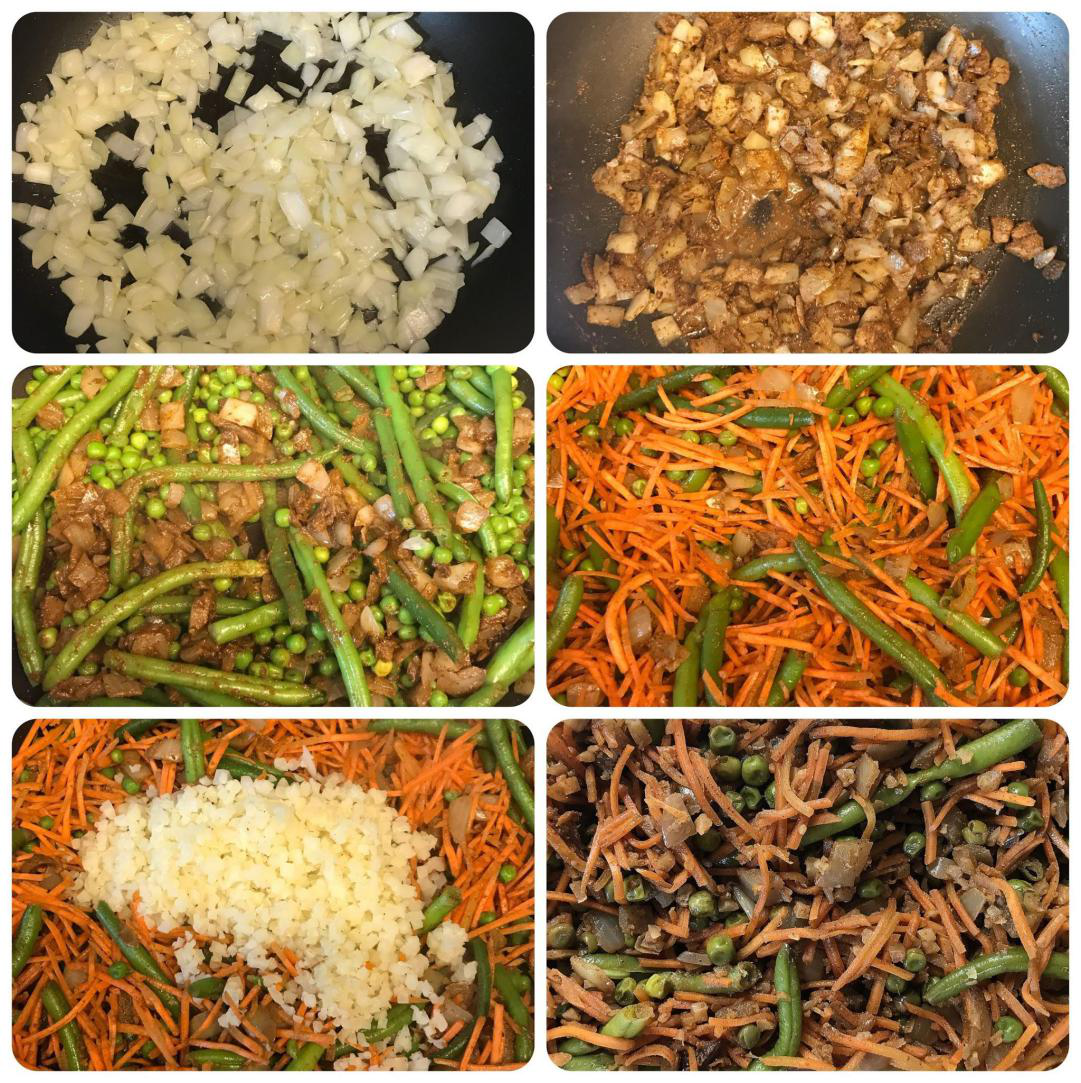
  1. Cook/steam the green vegetables and cauliflower rice ready to add later on in the recipe
  2. Fry onions until soft
  3. Add 1 tablespoon of Garam Masala, 2 tablespoons of cold water and mix
  4. Add the green beans, petitis pois and give a good stir and leave on a low heat for about 5 minutes
  5. Add the grated carrot and mix well, and then add the cauliflower rice mix and put lid on and leave on a low heat for about 20 minutes, stirring occasionally.
  6. Once carrot is cooked and soft the Biryani is ready to serve


TIP

If you have a healthy appetite and eat meat you can always add a cooked chicken breast chopped up or any meat of your choice, remember this will add calories to the dish

If storing leftovers, place in a microwave container in the fridge and make sure meal is thoroughly heated through when ready to eat. I find kept in the fridge the Biryani is ok up to three days if no meat is added.
Courtesy of @challengeannika

Filed Under: Uncategorised

A first look at Indoor Cycling with Stages Power

6th November 2017 By Martin

On Monday nights Bay Cycles have started indoor cycling with the Stages Power bikes at Venning Ride. It’s a great way to keep fit through the winter evenings, with the motivation of the pumping music, sufferfest videos and friends to keep you company. I’m sure you’ve all been impressed with the state of the art Stages indoor cycling bikes, but if you’re new to it all the wealth of data can be very confusing. So what exactly are you getting out of it?

Here we will take a bit of a look at Lisa’s data to start to understand the benefits of training with power and how to use it to get you fitter, faster!

Graph

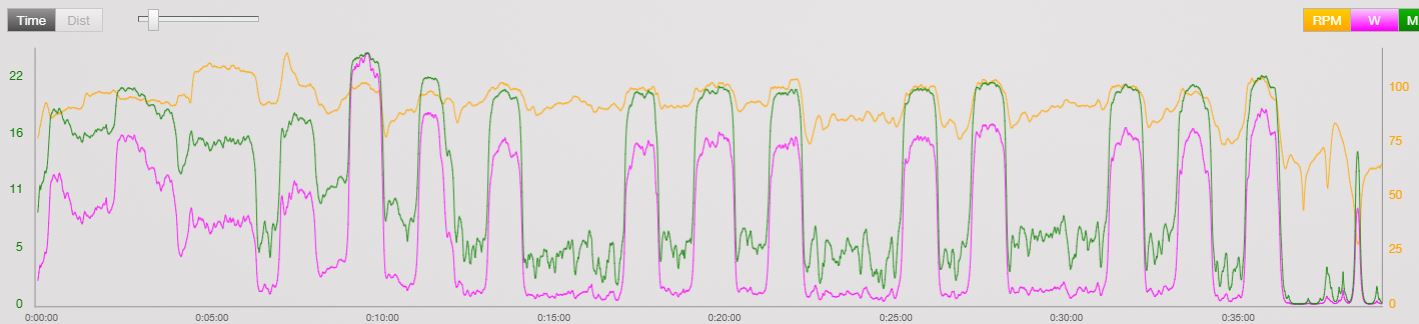
Looking at Lisa’s graph, the pink line is Power (Watts), the yellow line is cadence (RPM) and the green line ‘speed’ (mph). All we can see is how power, cadence and speed go up and down several times throughout the session. It has recorded the numbers for power, but I’ve deleted those numbers because, as Einstein said, its all relative! Everyone is different – some people are stronger than others, some are more well trained than others – so in terms of the effort you make in any one session, the actual numbers are not so important. What is important is how hard it was FOR YOU. This is one of the reasons we use ZONES.

Zones

Zones show this relative intensity. This way we can ‘measure’ how much effort someone puts in to a ride or workout regardless of who they are, whether they are beginners, experienced or even professional riders.

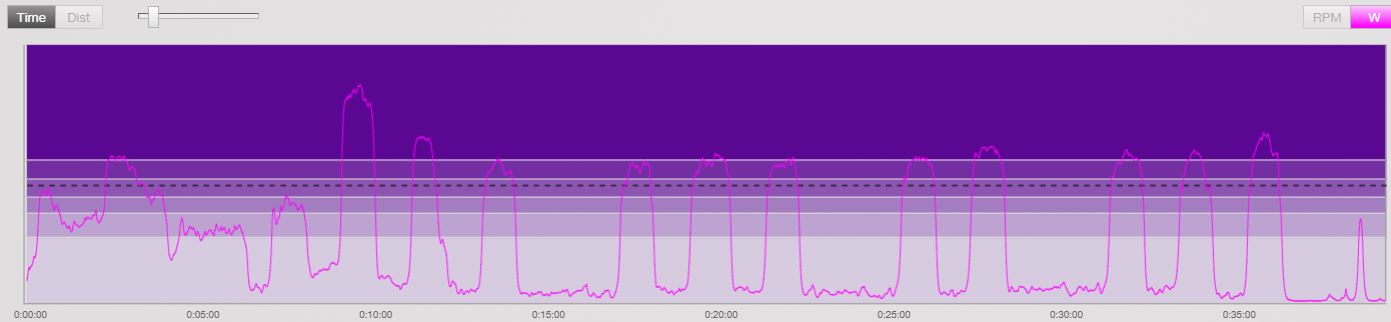
Zones also give us an indication of how the ride is helping us to get faster or stronger. Our body works in different ways in different zones, so we get different benefits from training in different zones. So this graph shows just the power curve, with zones in the background.

Threshold

In this graph you can see Lisa’s zones. The zones are in the background, from zone 1 at the bottom, to zone 6 at the top. ‘Threshold’ is shown by the dotted line. Threshold is known by different names such as FTP (Functional Threshold power), Lactacte Threshold (LT) and so on and each has different definitions. The basic idea is that threshold is the amount of effort that you can only just sustain indefinitely (or for a very long time, depending on the definition). In general terms, as you try harder and harder, your legs start to burn and it gets harder to sustain your power.  Threshold is the point where it may be tough, but you can keep pushing at that level for a ‘long time’ (how ‘long’ varies according to the definition). Any harder and you simply can’t sustain it. You might be able to ride harder than that for a short while – it will feel harder and harder, legs burn more and more  – but after a few seconds, a few minutes or several minutes at most you simply can’t sustain that level of effort – you ‘blow up’.

Sufferfest

Now we have a real idea of how hard that session was – look at all the times Lisa made really big efforts, above her threshold. This was a sufferfest video session and it does what it says on the tin – it makes you suffer! So in this session which lasted just under 40 minutes. Lisa made 12 really big efforts above threshold (including one in the warm up). Each time you go over your threshold it hurts – so yes – Lisa did suffer!

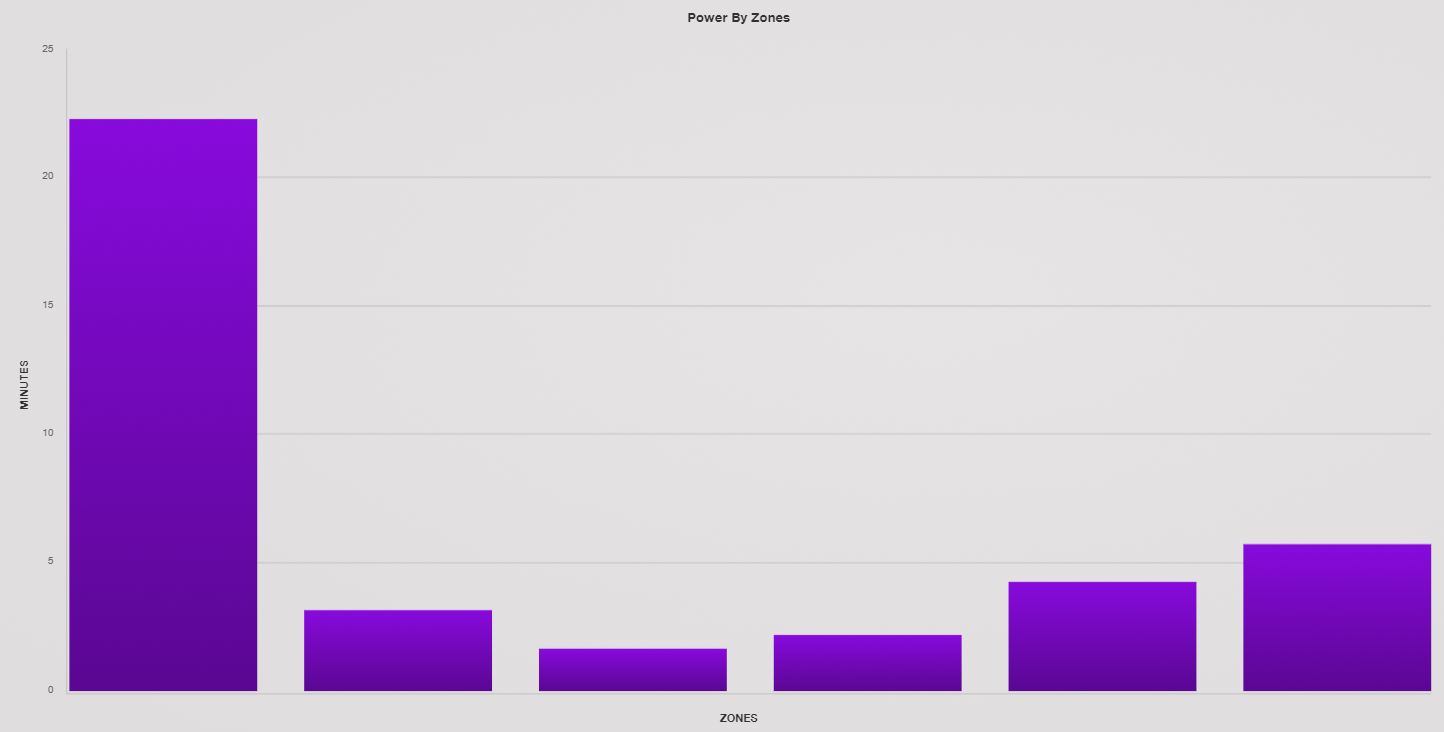
We can look at this slightly differently and see how much time Lisa spent in each of these zones;

This graph shows the time spent in each zone. Zone 4 is ‘threshold’, and Lisa spent a good couple of minutes there. However, lots of the session was really hard, above threshold in zone 5 (over 4 minutes) and extremely hard in zone 6 (approx 6 minutes). So this was a high intensity session. Repeatedly going over threshold (12 times in 40 minutes), spending a few minutes in zone 5 (often called the VO2 Max zone – as it helps to improve your aerobic capacity) and several minutes in zone 6 which develops anaerobic capacity, lactate tolerance and starts to work on neuromuscular power too.

Intervals

Incidentally, interval sessions like this, where you repeatedly ride really hard then easier to allow some recovery mean that you can spend more time riding very hard than if you just ride fairly hard all the time. That’s why people  use interval sessions to train – you can work harder in the same amount of time.

Intensity

Looking back at those graphs we can see that power was often low and often high or very high – but overall how taxing was it? Well there is another measure we use call Intensity Factor (IF). This measures how hard the workout is for YOU relative to your personal threshold. An IF of 1.00 is equivalent to 100% of your threshold – so it is theoretically the maximum effort you can possibly make (in an hour in this definition).

Despite the many easier sections, overall the IF for this session was 0.90 or 90% of Lisa’s threshold – which is pretty good going! This is just another way of showing how very hard this session was – and another way to compare this session with any other. With that in mind, lets see how hard Lisa tries and how much she suffers next week!

Filed Under: Uncategorised

A Springboard to Success

3rd April 2017 By Martin

 Spring is here! The nicer weather and longer days naturally inspire us to get out and ride more, but how do we make the most of it?

Take time to take stock, refocus and advance, pedal rev by pedal rev to your season goals…

Here are a few tips to help you on the way;                                                         

Let there be light!


It’s springtime, the clocks have gone forward so we have more light in the evenings. Use it! Now is the perfect opportunity to get in an extra ride or two mid-week to build your fitness.

Beware that it’s all too easy to suddenly up your training but this will only lead to excessive fatigue – then you are more likely to miss training sessions completely. Start off gently and increase your training time gradually over the weeks.

After a long day at work it can be hard to get yourself moving, so try arranging evening rides with friends to help get you out on your bike regularly and enjoy those lighter spring evenings.

Spring Clean

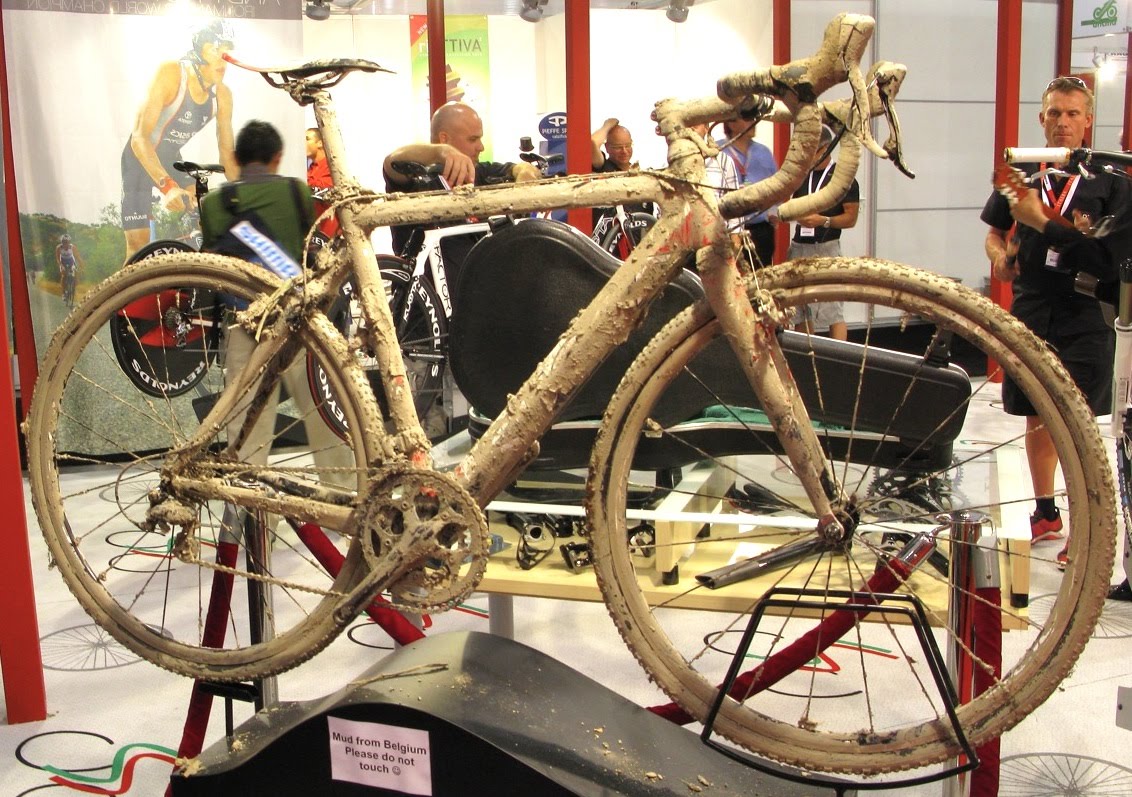
This one could do with a spring clean!

Make sure your bikes and equipment are all ready for training through the spring. After a winter of abuse it’s important to check your tyres, your chain and cassette, brake and gear cables, brake blocks etc. You may need to replace some or all of these. It’s better to do it now than to find out they don’t work properly on a long training ride, or even more worryingly a race or event – slipping gears or a broken chain could put paid to months of dedicated training in an instant. If you’ve been saving your ‘best bike’ in the garage all winter, don’t forget to check that over too before it sees the light of day.


Take Stock

You’ve trained through winter with your goals in mind and now you’re entering a new phase with more time to train, what with the lighter evenings and all. It’s time to take stock.

Check your progress on the way to your goals. Analyse results from early races or events, or redo fitness tests, such as an FTP test.

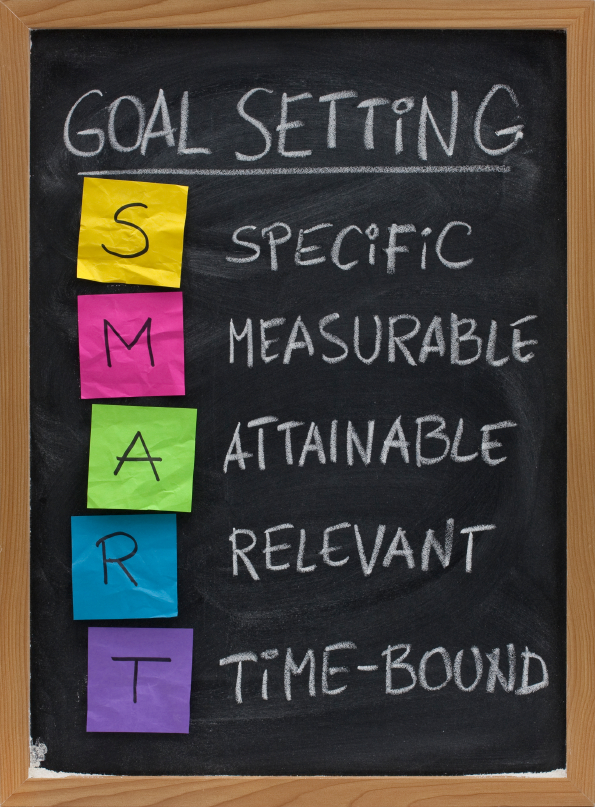
SMART (Specific, Measurable, Attainable, Relevant, Time-bound) goal setting concept presented on blackboard with colourful crumpled sticky notes and white chalk handwriting

Armed with this knowledge of your current state of fitness, your strengths and weaknesses in relation to your goals, revisit your long term plan. Target the areas you still need to work most on, whilst maintaining the aspects of fitness you’re already strong in. Break your long term goal into a series of shorter ones so that you can keep on track more easily. Working in manageable chinks on short term goals will also help to keep you focused and motivated when your big event is still months away.

Focus on Limiters

Once you have looked at your progress so far towards your goals you will need to reshape your plans in order to ensure that you achieve your major goal for the year. With your long term plan in place and your goals broken down into shorter manageable chunks it’s time to work on the details. You’ve analysed your strengths and weaknesses, now think of these in terms of limiters. What is limiting you from reaching your goal? For instance climbing may be a weakness, but if your goal is a to get a PB in a 10 mile Time Trial, climbing may well be a weakness, but it is not a limiter! In this case spending valuable training time working on climbing is time wasted and is potentially counter productive. Work more on your limiters. Always think in relation to your specific goals. Target those areas that will bring about the biggest improvements – Train Smart!

Camp it Up!

Spring is the best time of year to think about a training camp. Concentrating entirely on your cycling for 4 days, a week or even two can bring about massive gains in fitness. Not only do you ride more than usual, but you rest and recover more, looking after your nutrition and hydration without the usual distractions of every day life. Increase your training load by just the right amount, complimented by the correct nutrition, hydration and recovery and you’ll come back from your training camp stronger than ever. Your body, having assimilated that extra work, will be able to support more intense training to take you on to new heights of fitness.

Training camps are not just for pro’s, but go to the right training camp and you’ll feel like one! Or why not organise one yourself? If you want a more relaxed experience which is part training, part holiday, then this could be the right choice for you. Bear in mind though, that just because you can train all day every day, it doesn’t mean that you should. By riding more than usual you overload your body, so it’s really important to look after your recovery too and get the balance right. Yes, you want to get more miles in than usual, but you don’t want to run yourself into the ground! Get it right and your fitness will come in leaps and bounds – get it wrong and you’ll end up overtraining and put your training back weeks. This is where an organised training camp with coaching support will help you to maximise your gains.

Another option is the stay at home camp. Take time out to concentrate on your cycling – just as you would on a training camp. Take a long weekend off work. Ride back to back for 4 days. Turn off the phone, ignore the emails. Eat, drink, ride, and sleep cycling and nothing else. A few days ‘mini camp’ staying away or even based at home can give a massive boost to your fitness.

Cycling holiday, mini camp, self organised or full on coach supported training camp, you can’t beat that combination of training overload, nutrition, hydration and recovery in taking your fitness to the next level.

Dress Rehearsal If you’re training with one major goal in mind there is no better way to prepare than to run through a full dress rehearsal. Choose an event or plan your own ride that mimics the characteristics of your major goal as closely as possible, in terms of distance, terrain etc. Make sure you ride the same bike, wear and carry the same kit, spares etc. In short try out everything before the big day.

Use the opportunity to learn as much as possible, about your fitness, your physical and mental strengths and weaknesses, your gearing and choice of equipment, such as tyres and pressures, your nutrition and hydration and all sorts of other things that you won’t even consider until you’re in the situation. Forgetting something or choosing the wrong item, food or drink now might be irritating, but you have time to put it right. You don’t want to end up stranded on the big day realising what you’ve forgotten, or suffering from stomach problems because you tried a new gel someone recommended that doesn’t suit you. Plan and trial everything, down to the last detail.

Hold your dress rehearsal well in advance to give you time to work on any area of your performance that is lacking, or to find and try alternative foods, drinks or equipment. Make a comprehensive kit list of everything you need to take with you for the big event – and I do mean absolutely everything. Don’t be like the rider who packed his car and only realised hundreds of miles away from home that he’d forgotten his front wheel! (true story!). In the words of the cub scout motto ‘ Be Prepared!’

I hope you enjoyed this series of tips – keep an eye out for more on facebook, twitter and here on the website


Filed Under: Uncategorised

RSS Unknown Feed

Newsletter

Please subscribe to our newsletter and we'll keep you updated.

Contact Us

  • This field is for validation purposes and should be left unchanged.

© KOM Coaching 2015


Mountain photos with kind permission of Barney Moss @wheresbarney