Logo
  • E-mail
  • Facebook
  • Instagram
  • Twitter

Martin Burrows
07917 605 084
martin@komcoaching.co.uk

Menu   ≡ ╳
  • HOME
  • Personlised COACHING
    • Levels of Coaching
    • Fully Personalised Coaching Compare
  • Fixed Training Plans Intro
    • More Info – Fixed Training Plans
  • Guided Rides & Holidays
  • Gift Vouchers
  • BLOG
  • Why Choose Us?
    • About
      • Testimonials
  • Contact
    • Privacy Policy, T’s &C’s
  • KOM CHALLENGES website

Winter Alternatives

17th January 2016 By Admin

Most of the way through winter the weather doesn’t get too extreme, here in the South West, at least, but there are the odd times where snow or ice make training outside not only unpleasant, but downright dangerous.

It probably goes without saying, but its not worth risking a slip or fall and ruining your training and hence the start of your season. Stay indoors and use the turbo!

For many ofBKool us, the turbo is a last resort, but there are advantages. It is so much easier to ensure that you train at exactly the right intensity on a turbo trainer. The fact that there’s no rest, no traffic, no unwanted variations in gradient or interruptions mean that you can do a quality workout in less time than on the road. I do know riders who love this about training indoors and seem to prefer training inside. But, if you’re like me and most riders I know, turbo sessions are something to be endured for the sake of your goals. Think of these positives if you’re struggling through those intervals.
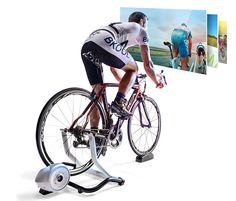
There are an infinite number of turbo sessions you could do, so how to decide? First of all look at your plan and see if it’s easy to adapt it to a turbo session instead. Some sessions would be almost identical – whereas others don’t translate so well. If you are unsure what to do, take a step back and focus on your goals. If you can’t replicate the exact session you had planned, consider what you want to achieve in this block of training.

Focus on your goals. Always go back to what you are trying to achieve and the answer should be clear!

KOM Coaching fixed training plans provide structured targeted workouts, ideal for making the most of your indoor training
 

Filed Under: Uncategorised

Through and Off and Race Tactics

7th January 2016 By Admin

Aviary Photo_130966754560599748You may have heard of ‘through and off’, or been involved in it on a clubrun, chaingang, or in a race. Hopefully you have some idea of how it works – if not then this excellent article will go a long way to explaining it; http://www.gregarios.co.uk/cycling-clubs/chain-gang-through-and-off.html

Why?

However, a group riding through and off often fall apart. One of the main reasons is that riders don’t know WHY they are doing it. If you understand the reasons behind it better, you will ride through and off better. So, what’s it all for?

Group riding

Think about a racing situation. We’re not talking about the club chaingang here, where the goal is to rip the legs off each other! Through and off is used by a group  – often a break away – to ride TOGETHER as quickly and efficiently as possible. It’s a fact that groups can ride quicker than individuals. Otherwise the best Time Triallists would win all the Road Races – but they don’t. That’s the reason WHY you ride through and off and keeping in mind that staying together will help you to ride quicker should help you ride through and off better.

Teams and alliances

Road racing is a really strange sport when you think about it – you ride as individuals, yet in teams. Then, depending on the situation you will form mutually beneficial alliances, helping riders from other teams, until the time is right again to ride against them. You might swap alliances several times and back again within one race, depending on how the race forms – and it’s usually all down to the basic fact that two or more riders are better than one.

Slipstreaming

By staying in the slipstream of another rider or group (or drafting as the Americans call it) you can save up to 30% of your energy, yet ride at the same speed. So we go through and off to swap turns at the front, recuperating a little as we follow the wheels before taking our turn at the front again. Save your energy for key moments like the last hill, your big attack, or the final sprint.

Key moments

We need the other riders in the group to do their turns too, so we stay ahead of the chasing bunch. If you go it alone too early you’ll never make it. It’s vital to keep the group together until you’re near enough to the finish to launch your race winning break and stay away all the way to the line. That might be on the final climb. Maybe a surprise attack a few miles out. That’s why you need to ride smoothly, don’t accelerate as you hit the front as this will split up the group. Keep it all together until that key moment. If you’re a great sprinter, you’ll want to keep the group together all the way to the final sprint.

Keep it Smooth!

Your goal while riding through and off is to keep the group together. Why? Because it’s faster and more efficient. Quite simply you’ll have more chance of staying away if you work together. You have a far better chance of winning from a small group than against 60 riders or more! With this in mind it’s easy to see now why the most important element to riding through and off is keeping it smooth. DON’T accelerate as you hit the front. Repeated accelerations start to crack and eventually split the group up. Ease off a little as you come off the front, otherwise you’re forcing the next rider coming through to accelerate. Keep it steady, keep it smooth.

WiAviary Photo_130966764336292184n!

It’s often said that cycling is like a game of chess. There are so many different tactics to play. Alliances change all the time during a race, so if it’s no longer beneficial to keep some or all of the riders in the group you now know the easiest way to split a group doing through and off too! You might want to get rid of the dead wood in the break – those not doing their turns for instance. Perhaps you’re getting close to the finish and that top sprinter is still with you. You don’t want to give him an armchair ride to the line! Now it’s time to disrupt the group, or launch your stinging attack. Timing is of the essence here – too early and you or the reduced group won’t make it to the line without getting caught, too late and someone might beat you to the killer blow, or simply hang on to beat you in the final sprint….Well, no one said it’s easy….it’s a bike race!

Filed Under: Uncategorised

New Year, New Goals

1st January 2016 By Admin

So here it is – another new year and all around people are making new years resolutions. Maybe you want to lose a few pounds, you resolve to finish every one of those tough turbo sessions, or you are more focussed on race results for the coming year. Whatever you want to achieve in the coming year or season, the new year naturally inspires us to think ahead to the world of opportunities open to us. If you haven’t already started setting goals for next season, now is the time to start!


Review

Before looking ahead though, it’s useful to look back over last season. Ask yourself some simple, general questions – for instance, “What went well?” Then begin to drill down into your answers a little further – Why did it go well? What training or sessions did you do that made that work? What tactics did you employ etc. Get right down to the specifics. Then do the same for the things that didn’t go so well, and build up a picture of your season, what you achieved and how you achieved it, what goals you didn’t manage to achieve, why you didn’t achieve them, and what you could do differently to make your chances of success greater next year. Remember, if you keep on doing the same things, you’re likely to get pretty similar results.


Assess

It’s also important to take a snap shot of where you are now. Assess your current fitness level. An FTP test (functional threshold power) to measure your functional threshold is a good place to start. It will give you valuable information about your general fitness – the size of your ‘engine’ if you like, and provide you with a baseline to compare against in the future. This way you can measure your progress over the coming months. Recently FTP has taken on some kind of mythical status – a ‘magic’ number – but a good coach will look at far more than just your FTP. Consider all the components of fitness, and particularly those that match the demands of your targeted event. Assess all aspects of fitness, skills and tactical ability before deciding exactly what you will spend your valuable training time working on.

Goals

Now you can start to look ahead – what do you want to achieve next year? Write down your goals. For the really serious rider we should be looking not just at next year, but years ahead. British Cycling, for instance look at Olympic Cycles, planning four years or more ahead. For most of us though, next season is a good place to start.


Begin with the end in Mind

Stephen Covey in his international best-seller ‘The 7 Habits of Highly Effective People’ stated ‘Begin with the end in mind’ and you could do a lot worse than to follow his advice. Start with the goal – a clearly defined, specific goal. Form a crystal clear picture in your mind of exactly what it is you want to achieve and you are more likely to achieve it. Not just because you have defined what success is for you, not just because you know exactly what it looks like and feels like, but because by beginning with the end in mind you can analyse what it will take to achieve that goal – what components of fitness, techniques and tactics are necessary to achieve that goal, and hence exactly what you will need to work on to fulfil your goal.


Specificity

One of the main tenets of training theory is specificity. If you want to win a mountainous race, you need to work on your climbing. If you want to be a track sprinter you need to work on muscle mass, strength, speed and power. Chris Froome and Sir Chris Hoy don’t do the same training. They look at exactly what qualities they need to win their events and train specifically for them. Too many people just ride their bikes in the hope that it will make them faster. Well, it will to some extent, but to get the most out of your valuable training time and the best results you can, you need to know exactly what your goals are, what you need to be good at to achieve them and work on those specific areas.


Short Term Goals

You’ve reviewed your season, your strengths and weaknesses – so you know ‘where you are’. You’ve set your goals – so you know your ‘destination’. Now you need to plan your route to success. This is where a coach can be invaluable – they can analyse the demands of an event and power files associated with those events, look at your own strengths and weaknesses and design a training programme specifically for you to address those gaps in your performance, giving you the best possible chance of success. They can also advise you on how best to progress from A to B….there are lots of ways to go, lots of ways to progress your fitness. A good coach will know all about periodisation and how to bring on your form at the right time. An excellent coach will work closely with you, follow your progress and tweak your training programme as you go to ensure you get the very best out of yourself. This is why it’s so important to set intermediate, short term goals. Take stock of your progress regularly. If you’re not quite on course, it gives you the opportunity to get back on track. Without those short term goals you might end up going in the wrong direction all season, and your goals will remain out of sight.


Planning

Whether you take the advice of a professional coach or decide to go it alone, planning is the key.

  • Review your season, assess your current fitness, your strengths and weaknesses
  • Set your goals and plan how to achieve them
  • Check your progress by breaking your goals down into smaller, short term goals
  • See where you are and frequently revise your plan

Don’t just ride your bike. Don’t leave it to luck. Give yourself the best possible chance of achieving your goals. Plan for success now! As Benjamin Franklin famously said “If you fail to plan, you are planning to fail!”

Filed Under: Uncategorised

News!

28th December 2015 By Admin

Coming soon….

Event specific training plans…..first partners announcement…..performance testing offer…

Filed Under: Uncategorised

King of the Mountains!

28th December 2014 By Admin

King of the Mountains! polkadot TDF

Climbers!

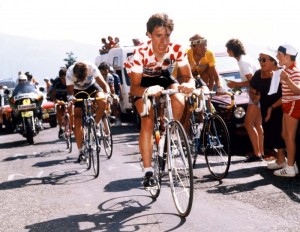
The King of the Mountains is one of the most prestigious prizes in cycling. The leader of this competition for mountain goats instantly recognisable by the polkadot jersey on their back. Through the Alps and the Pyrenees the diminutive members of the professional peloton battle to every peak for the right to wear that gaudy but ultimately desirable jersey all the way to Paris and into the history books. It is the stuff that Legends are made of. Frederico Bahamontes – ‘The Eagle of Toledo’, Charly Gaul – ‘The Angel of the Mountains’ Luis ‘Lucho’ Herrra the first Colombian superstar of cycling, Claudio Chiappucci, Marco Pantani and Robert Millar – Britain’s first King of the Mountains – all tiny men with huge reputations.

Robert Millar

These climbing superstars were very rarely Tour winners – too slight to make good all-rounders , they just didn’t have the power to ride a decent time trial, where they lost minutes and any chance of overall glory in the Tour. And generally the bigger guys just didn’t stand a chance up those monstrous mountains when the bantam weight climbers took flight up those vertiginous mountain passes.

All-rounders!

But in the 90’s the balance of power began to change. Perhaps partly due to the dreaded scourge of EPO, but more importantly because of advances in technology and training methods the professional peloton got more…. professional! Heart rate monitors and training in zones became de rigueur. Consequently the standard of the whole peloton was raised. Tour winners could no longer afford to leave the climbers to gain minutes in the mountains. Huge ‘engines’ like Miguel Indurain were so powerful they overcame their inherent weight penalty to match the pure climbers. JajaThen along came Laurent Jalabert – who started out as a sprinter, then after an incredibly nasty crash in a sprint at the Tour, he redesigned himself as an all rounder – taking countless one day and week long races. But the Tour was always beyond him. He’d won stages at the Tour and the Green ‘points’ Jersey, but knew he could never win the Yellow jersey outright. What else was left? The highly prestigious polkadot King of the Mountains jersey. Make no bones about it, Jalabert was a classy rider, but when he broke away day after day to target the famous Polkadot jersey he certainly broke the mould of a typical King of the Mountains. A brilliant tactical win by a non-specialist – perhaps a sign of things to come…


Strava ButtonEveryone!

Then along came Strava and changed how we train, changed the very nature of many of our rides, and brought the KOM title to the masses! Now after every ride we religiously download our data to see if we managed a PR on the climbs we rode today, or even a KOM – the fastest time EVER up a specific hill. It may not be a mountain, but you or I can be the King of that Mountain! It may not even be a hill – KOM’s are available whatever the segment, whether uphill or down dale, a famous climb or your favourite piece of fast flat road. You no longer need to be a mountain goat to be King of The Mountains – somewhere out there there’s a KOM for you – and if there isn’t you can just make a segment that suits you. Being King of the Mountains on the road at the end of your street might not quite have the Kudos of KOM on Alpe D’huez – but you’re still King of the Mountains! …until someone faster comes along…..

Filed Under: Uncategorised

  • « Previous Page
  • 1
  • …
  • 10
  • 11
  • 12

RSS Unknown Feed

Newsletter

Please subscribe to our newsletter and we'll keep you updated.

Contact Us

  • This field is for validation purposes and should be left unchanged.

© KOM Coaching 2015


Mountain photos with kind permission of Barney Moss @wheresbarney